Key Takeaways
The coolest restaurant in Austin is rarely just the most expensive or most photographed. It is the place whose food, setting, neighborhood, and timing fit the experience you actually want.
- Judge the full experience, not atmosphere alone.
- Choose a neighborhood that suits your plans and transportation.
- Match the restaurant to your occasion, group size, and appetite.
- Compare menus, portions, waits, and total cost before leaving home.
- Use visual menus to decide what looks worth ordering.
What makes a restaurant the coolest in Austin
The coolest restaurant in Austin should give you a reason to remember the meal after the plates are cleared. That might be a smoky brisket plate, a dramatic dining room, a sunny patio, or a soundtrack that turns dinner into part of the evening. Start with the kind of experience you want, then judge restaurants against that standard rather than chasing a universal ranking.
Atmosphere, design, and overall energy
A memorable room has a point of view. Look for details such as warm lighting, open kitchens, vintage furniture, bold tile, polished service, or a patio that feels connected to the city rather than tacked onto the side. The best atmosphere supports the food: a relaxed counter works for a quick bite, while a quieter room makes more sense for a long dinner.
The practical question is whether you will enjoy sitting there for the amount of time your meal requires. A beautiful room with cramped tables may disappoint during a celebration, while a noisy dining room can be perfect for a lively weekend gathering.
Creative food and signature dishes
Cool restaurants usually have a clear culinary idea, even when the menu looks broad. Look for dishes with contrast—crisp edges against something creamy, bright pickles alongside rich meat, or chile heat balanced by sweetness. A signature dish should be more than a clever name; it should give you a reason to return.
Before choosing, browse the menu and picture the whole order. On SeeDish, diners can explore Austin restaurants, browse menus visually, and discover specific food through dish photography, which is useful when the deciding factor is a particular craving rather than a restaurant name. The menu is the real preview of whether the place fits your appetite.
Live music, events, and entertainment
Austin’s restaurant energy can extend beyond the table. Live music, vinyl selections, guest chefs, themed nights, and busy bar programs all change the feel of a meal. Some venues are best when the room is humming; others are more enjoyable when entertainment stays in the background.
Check the schedule before you go, especially if you want to talk over dinner. A performance may be the main attraction for one group and an unwanted distraction for another, so entertainment belongs in the decision—not as an automatic mark of quality.
Local popularity versus tourist appeal
A popular restaurant can still be deeply local, and a visitor favorite can still serve an excellent meal. The useful distinction is whether its reputation matches what you care about: a certain dish, a neighborhood stroll, a relaxed patio, or a special-occasion setting. Local approval matters, but personal fit matters more.
For a wider sense of the city’s dining range, compare a curated Austin dining guide with menus and current availability. Then check whether the places that catch your eye offer the food and atmosphere you actually want tonight.
Choose the right Austin neighborhood
Austin’s dining personality shifts quickly from one area to the next. Downtown is convenient for hotels and events, East Austin rewards wandering, and South Congress brings a polished blend of restaurants, shops, and people-watching. The right neighborhood can make a good meal feel effortless, while the wrong one can turn dinner into a parking project.
Think about what happens before and after the meal. If you are seeing a show, meeting friends from different parts of town, or hoping to walk between stops, location should carry as much weight as the menu.
Downtown and the Warehouse District
Downtown and the Warehouse District work well for visitors, office dinners, pre-show meals, and evenings that continue into bars or music venues. Restaurants here often range from sleek dining rooms to energetic lounges, with a strong emphasis on cocktails and service. It is a practical choice when several people need to meet in one central place.
Expect busier streets during events and a higher chance of limited parking. Reserve for a specific time, build in a little walking, and decide whether you want a quick meal or a slower dinner before selecting a table.
East Austin and East Sixth
East Austin and East Sixth are good territory for diners who want character, variety, and a less formal rhythm. You may find compact dining rooms, food trucks, patios, bars, and menus that move between Texas ingredients and international flavors. The area suits a loose evening where dinner is one stop among several.
Because spaces can be small and popular, flexibility helps. Have a backup nearby, particularly on Friday and Saturday nights, and use the menu to settle the main question before you arrive: are you looking for tacos, a full dinner, dessert, or drinks with a snack?
South Congress and South Austin
South Congress is a natural fit for visitors who want dining alongside shopping, hotels, and an easy walk. The corridor can feel polished and busy, while nearby South Austin offers a broader mix of casual counters, neighborhood restaurants, and spacious patios. It is especially useful for pairing a meal with an afternoon or evening around the city.
Traffic and pedestrian activity can make short distances feel slower than expected. If your table is outdoors, check the forecast and decide whether the view and open air are worth trading for a little less quiet.
North Loop, Hyde Park, and other local favorites
North Loop, Hyde Park, and nearby areas appeal to diners who prefer neighborhood character over a central-city scene. Restaurants here often feel more relaxed, with regulars returning for dependable dishes and service rather than a one-night spectacle. These areas can be a smart choice for a low-key date, an easy weeknight meal, or a repeat visit.
They are also worth considering when the most visible restaurants are booked. Search by the food you want first, then compare distance, menu photos, and hours so the choice feels deliberate rather than like a consolation prize.
Match the restaurant to your dining occasion
The best restaurant for a birthday is not necessarily the best restaurant for a quick solo lunch. Occasion affects everything from noise level and table size to how much time you want to spend ordering and eating. Decide what the evening needs to accomplish before you get attached to a particular room.
A visual menu can make that choice easier because it shows portion style and presentation before you commit. SeeDish is built for the two questions diners ask most often: where should I eat, and what should I order? That approach is handy when the occasion is clear but the restaurant list is not.
Date-night destinations
For a date, look for comfortable spacing, lighting that feels flattering without being dim, and a menu with enough variety to support sharing. A strong date-night restaurant gives you a natural pace: perhaps a small first course, a dish to split, and a dessert or drink that keeps the evening from ending abruptly.
Noise deserves more attention than trendiness. If conversation is the point, skip rooms where music and tightly packed tables dominate, even if the restaurant is currently the most talked-about place in town.
Group dinners and celebrations
Groups need logistics as much as flavor. Check whether the restaurant accepts larger reservations, offers shareable dishes, accommodates dietary needs, and can keep the meal moving without making everyone order the same thing. A broad menu is helpful, but a clear ordering structure is even better.
Ask about deposits, timing, separate checks, and seating before you arrive. Those details rarely appear in a social post, yet they can determine whether a birthday dinner feels smooth or scattered.
Casual meals with standout food
Casual does not mean forgettable. Counter-service spots, food trucks, and neighborhood cafés can deliver the most focused cooking in town, especially when the menu concentrates on one style of food. These are ideal when you want flavor and texture without committing to a long evening.
Look closely at the menu photos for portion size and richness. A sandwich with crisp, saucy filling may be perfect after a long day, while a lighter bowl or vegetable-forward plate may make more sense before another activity.
Late-night dining and weekend plans
Late-night dining calls for a different checklist: confirmed hours, a kitchen that stays open, easy rideshare access, and food that satisfies without requiring a formal production. Weekends also bring longer waits and more unpredictable traffic, so a little planning can preserve the fun.
A useful late-night plan includes a few essentials:
- Confirm the kitchen’s closing time, not only the restaurant’s posted hours.
- Pick a backup within a short rideshare distance.
- Decide whether you want a full meal, a snack, or a dessert stop.
- Save the menu before leaving if phone service may be unreliable.
These small steps keep a spontaneous evening from ending with a hungry search through closed dining rooms. If you are already out, SeeDish can help you browse dishes visually before choosing the next stop.
Explore Austin’s most memorable restaurant styles
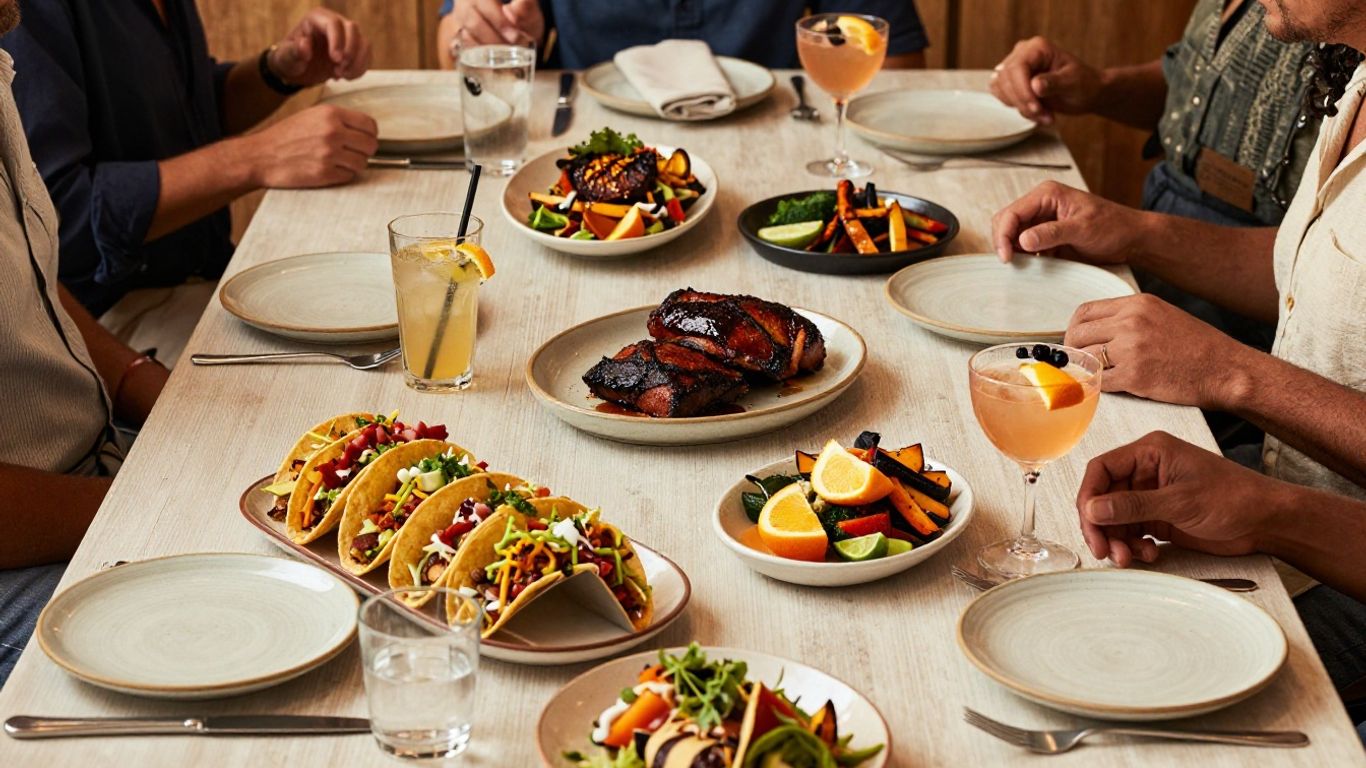
Austin’s dining identity is broad enough that “cool” can mean smoke, spice, seasonal produce, or a room built around gathering. The most memorable restaurants usually express their style consistently, from the menu language to the plateware and service. Rather than ranking cuisines against one another, choose the style that sounds best right now.
It also helps to separate an occasional splurge from a reliable everyday favorite. A tasting menu may be unforgettable but not practical after a long workday, while a taco counter can become the place you return to every week.
Texas barbecue with a modern twist
Barbecue remains one of Austin’s clearest dining signatures, but the experience is not limited to a traditional tray of meat. Modern interpretations may bring careful sourcing, unusual sides, sharper sauces, or a more designed dining room to the familiar smoke-and-salt foundation. The key questions are still simple: what is smoking today, when does service begin, and how long are you willing to wait?
Look for the texture you prefer. Brisket can range from lean and neatly sliced to deeply marbled and soft, while sausage and pork can change the balance of a shared order. Photos are particularly useful when you are choosing between a full platter and a smaller sandwich.
Mexican, Tex-Mex, and regional Latin cuisine
Austin offers plenty of room for tacos, enchiladas, grilled meats, seafood, masa-based dishes, and regional preparations that do not fit neatly into one label. For a memorable meal, notice whether the menu has a point of view about tortillas, chiles, salsas, or toppings. A focused menu often makes ordering easier and the flavors more distinct.
Spice level can be difficult to judge from descriptions alone. Check for bright, acidic salsas as well as richer options, and consider ordering one familiar dish alongside something new if your table has different heat preferences.
Farm-to-table and chef-driven menus
Chef-driven restaurants often change with the season, so their appeal comes from freshness and surprise rather than a fixed list of classics. Look for menus that explain ingredients clearly and offer a useful mix of vegetables, grains, seafood, and meat. These restaurants are a strong choice when the group enjoys sharing and trying dishes that may not be available next month.
The trade-off is predictability. A daily menu can be exciting, but it may require more questions about substitutions, portion sizes, and preparation. That is part of the experience for curious diners, not necessarily a drawback.
Food halls, patios, and unconventional dining spaces
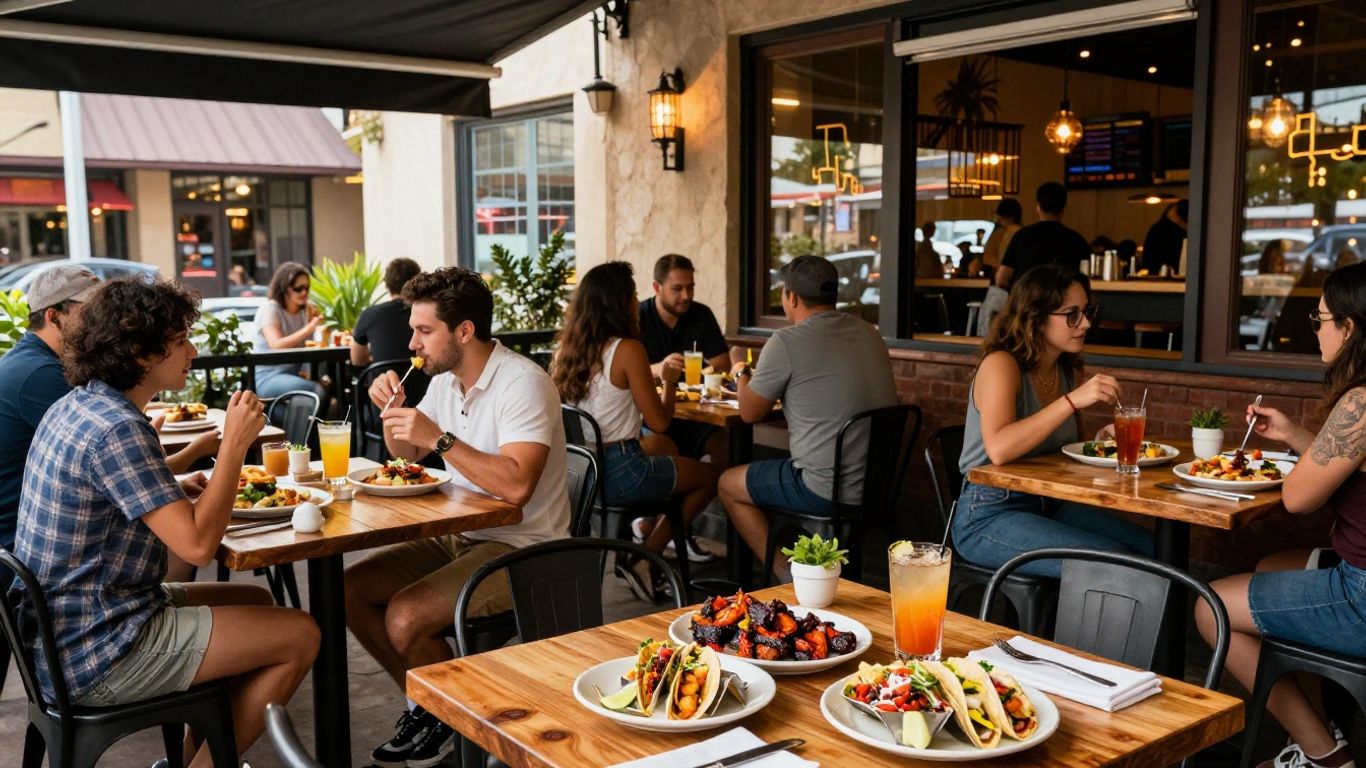
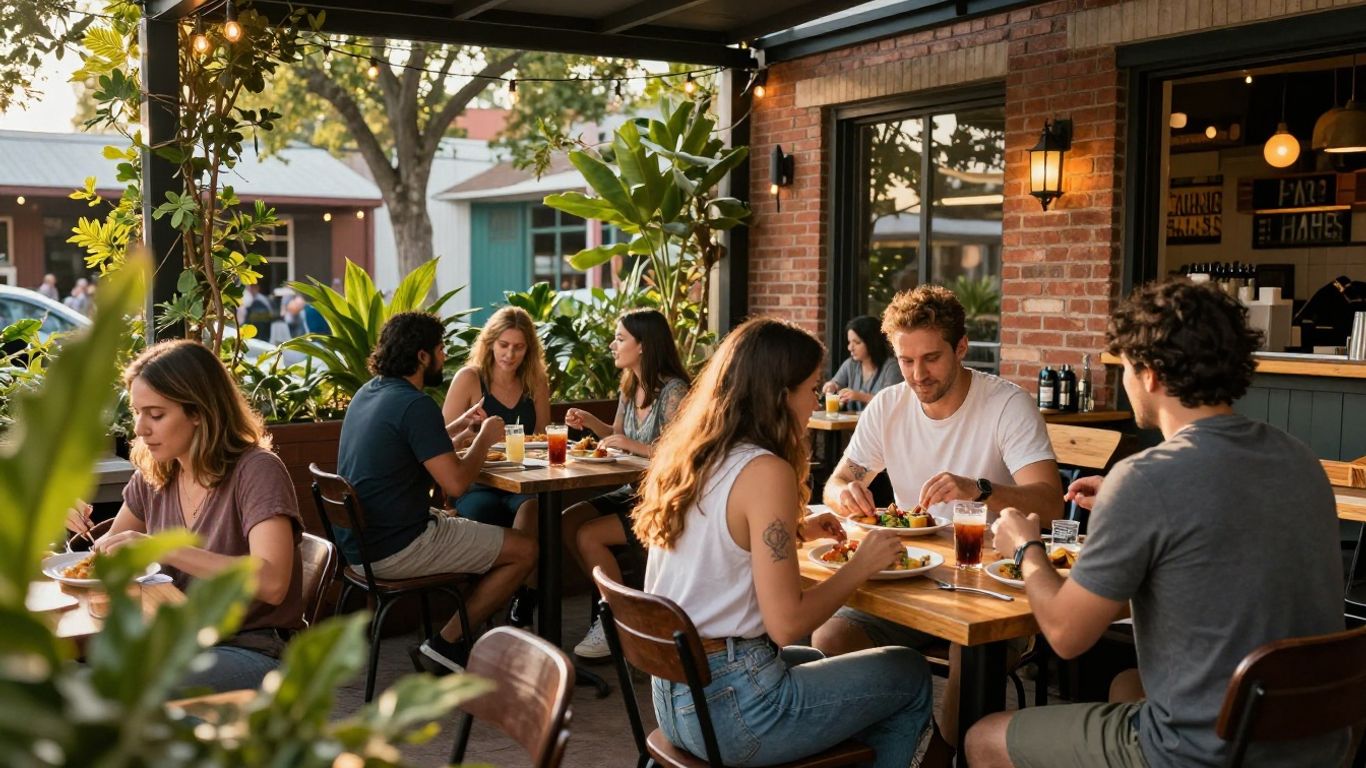
Food halls and unconventional spaces make it easier for a group to order differently without splitting up the evening. Patios add room to linger, while converted buildings, gardens, and market-style counters can provide the visual energy people often mean when they say a restaurant feels cool. These settings are especially useful for casual celebrations and visitors exploring Austin.
The atmosphere can change with weather and crowd levels. A patio that feels breezy at 6 p.m. may be hot later, and a food hall may become loud during peak dinner service, so check the conditions before making it the centerpiece of your plans.
Plan your visit before you go
A little preparation protects the part of dining that should feel spontaneous. Check hours, reservation policies, menu availability, and the route before you leave, especially for a popular restaurant or a night connected to an event. You do not need to over-plan every bite; you just want to remove avoidable friction.
Austin’s weather and traffic can shift the experience quickly. Give yourself more time than the map suggests, and have a second choice if the first restaurant has a long wait or an unexpectedly limited menu.
When to make a reservation
Reserve ahead for tasting menus, date-night rooms, large parties, weekends, and restaurants with a strong current following. For casual counters and food trucks, reservations may not exist, so look for ordering windows, online waitlists, or early service instead.
When booking, mention accessibility needs, a stroller, a birthday, or an outdoor preference in advance. A note cannot guarantee a particular table, but it gives the restaurant a fair chance to help.
Best times to avoid long waits
Early dinner, late lunch, and Sunday through Thursday are often calmer than peak Friday and Saturday service. Arriving near opening can also make a major difference at places that do not take reservations. If your schedule is flexible, choose the hour first and the restaurant second.
For busy barbecue or counter-service restaurants, confirm whether the wait is for a table, a line, or a limited daily supply. Those are different kinds of delay, and each calls for a different backup plan.
Parking, rideshares, and accessibility
Central neighborhoods may be easiest by rideshare or on foot, while farther-out restaurants can make driving more practical. Check the route, garage hours, curb access, and walking distance from drop-off before inviting someone who needs a smoother arrival.
A restaurant can look close on a map but still involve stairs, uneven sidewalks, or a crowded entrance. Calling ahead about accessible seating and restrooms is worthwhile, particularly for a group with varied mobility needs.
Dress codes, outdoor seating, and weather considerations
Most Austin restaurants lean relaxed, but a polished dining room may expect neater clothing than a counter-service spot. Outdoor seating is similarly variable: some patios are shaded and comfortable, while others are exposed to sun, wind, or sudden rain.
Bring a layer for cool evenings and avoid assuming that a patio is automatically the better table. If weather could affect the meal, choose an indoor option or confirm whether the restaurant can move reservations inside.
Compare the coolest restaurant options by budget
Budget is more than the menu price. A moderately priced meal with cocktails, dessert, parking, and a service fee can cost more than expected, while a casual counter can be satisfying with one focused order. Compare the complete experience, including how much food you want and how long you plan to stay.
The following ranges are planning guides rather than promises. Prices and menus change, so use them to narrow the field, then check the current menu before booking.
Affordable spots with a lively atmosphere
Affordable restaurants can still feel distinctive when they have a strong specialty, a busy counter, or a memorable setting. Think tacos, barbecue sandwiches, noodles, burgers, shared snacks, and food-hall stalls where you can control the size of the order. These options work well for casual dates, quick meals, and groups with different appetites.
A lower bill is easiest when you focus on one or two dishes instead of automatically adding every side. Menu photos help you judge whether a single entrée is substantial or whether sharing several smaller plates will give the table more variety.
Mid-range restaurants for a complete experience
Mid-range dining is often the sweet spot for a full Austin evening. You can usually expect a comfortable setting, a broader menu, attentive service, and enough flexibility to order a starter, entrée, and dessert without treating the meal like a major event.
This category is useful for visitors who want one reliable dinner that feels special but not formal. Compare neighborhoods and reservation times alongside the food, since convenience is part of the value.
High-end dining worth the splurge
High-end restaurants earn the splurge through more than expensive ingredients. Look for thoughtful pacing, precise cooking, strong hospitality, a room that supports the occasion, and a menu that offers something you cannot easily recreate elsewhere. A tasting menu may be right for an adventurous celebration, while à la carte ordering can offer more control.
Read the menu closely before committing. Ask about supplements, beverage pairings, deposits, and cancellation terms so the final bill does not surprise the table.
Drinks, service fees, and the full cost of a meal
The total cost often becomes clear only after drinks, tax, gratuity, service charges, and extras enter the picture. Use this simple comparison to set expectations before choosing a restaurant:
| Dining style | Typical planning range per person | Best fit | Main cost variable |
|---|---|---|---|
| Casual counter or food hall | $15–$30 | Quick meals and flexible groups | Extra sides and drinks |
| Mid-range dinner | $35–$75 | Dates and complete dinners | Cocktails, dessert, and gratuity |
| Special-occasion dining | $80–$180+ | Celebrations and long meals | Pairings, supplements, and service fees |
| Tasting-menu experience | $150+ | Diners seeking a structured evening | Beverage pairing and menu additions |
These ranges are useful for deciding how much room to leave in the budget, not for predicting a specific restaurant’s bill. Once you know your ceiling, compare the actual menu and decide whether the atmosphere, portions, and occasion justify the spend.
Conclusion
Finding the coolest restaurant in Austin comes down to matching the meal to your mood, neighborhood, company, and budget. Start with the food you want, use the setting and logistics to narrow the list, and check the current visual menu before you commit. When you are ready, browse Austin restaurants on SeeDish, see every dish before ordering, and find a meal that feels right for tonight.
Frequently Asked Questions
What is the coolest restaurant in Austin?
There is no single answer for every diner. The best choice depends on whether you value barbecue, creative cooking, live music, a stylish room, a patio, a date-night mood, or a convenient location.
Which Austin neighborhoods are best for restaurant hopping?
East Austin, East Sixth, South Congress, and the Downtown area are convenient for combining food with drinks, shopping, music, or a walk. Choose based on your planned stops and transportation.
Should I make a reservation at a popular Austin restaurant?
Usually, yes, for weekends, large parties, tasting menus, and special occasions. For restaurants without reservations, arrive early or check whether an online waitlist is available.
What should I look for on an Austin restaurant menu?
Look for the dishes that match your craving, portion size, spice level, dietary needs, and budget. A focused signature dish can tell you more about a restaurant than a long menu.
Is Austin dining expensive?
Austin has options across a wide range, from affordable counters and food halls to expensive tasting menus. Remember to include drinks, gratuity, service fees, parking, and dessert when estimating the total.
What is a good restaurant choice for a group?
Choose a place with shareable food, varied options, enough seating, and a clear reservation policy. Confirm separate checks, deposits, dietary accommodations, and timing before the event.
What is the best time to eat out in Austin?
Early dinner, late lunch, and weeknights are often easier than peak weekend hours. The ideal time also depends on the restaurant’s service style, since some popular counters may sell out early.